Running a limited company in the UK comes with important legal and financial responsibilities. One of the most essential obligations is preparing and filing company accounts correctly and on time. Whether you run a startup, a small business, or a dormant company, staying compliant with Companies House and HMRC is critical.
Many business owners struggle to understand the filing process, deadlines, and documentation requirements. Errors in filing can result in penalties, compliance issues, and unnecessary stress.
This guide explains everything you need to know about how to file company accounts online, including filing requirements, deadlines, common mistakes, and how professional accountants can help your business remain compliant.
What Are Company Accounts in the UK?
Company accounts are financial records that show the financial activity and performance of a business during an accounting period.
These accounts usually include:
• Profit and loss statement
• Balance sheet
• Notes about the accounts
• Corporation tax calculations
• Director’s report in some cases
All limited companies in the UK are legally required to prepare and submit company accounts to Companies House and HMRC annually.
The purpose of company accounts is to provide transparency about the company’s financial position and ensure businesses meet tax and compliance obligations.
Businesses searching for company accounts London services often require support with preparing accurate financial statements and filing them correctly.
Who Needs to File Company Accounts?
Almost every limited company registered in the UK must file annual accounts.
This includes:
• Small limited companies
• Startups
• Limited liability partnerships
• Dormant companies
• Micro entities
• Ecommerce businesses
• Contractors operating through limited companies
Even if your company has not traded during the year, dormant company accounts may still need to be filed.
Sole traders are generally not required to submit company accounts to Companies House, although they still need to manage tax reporting obligations.
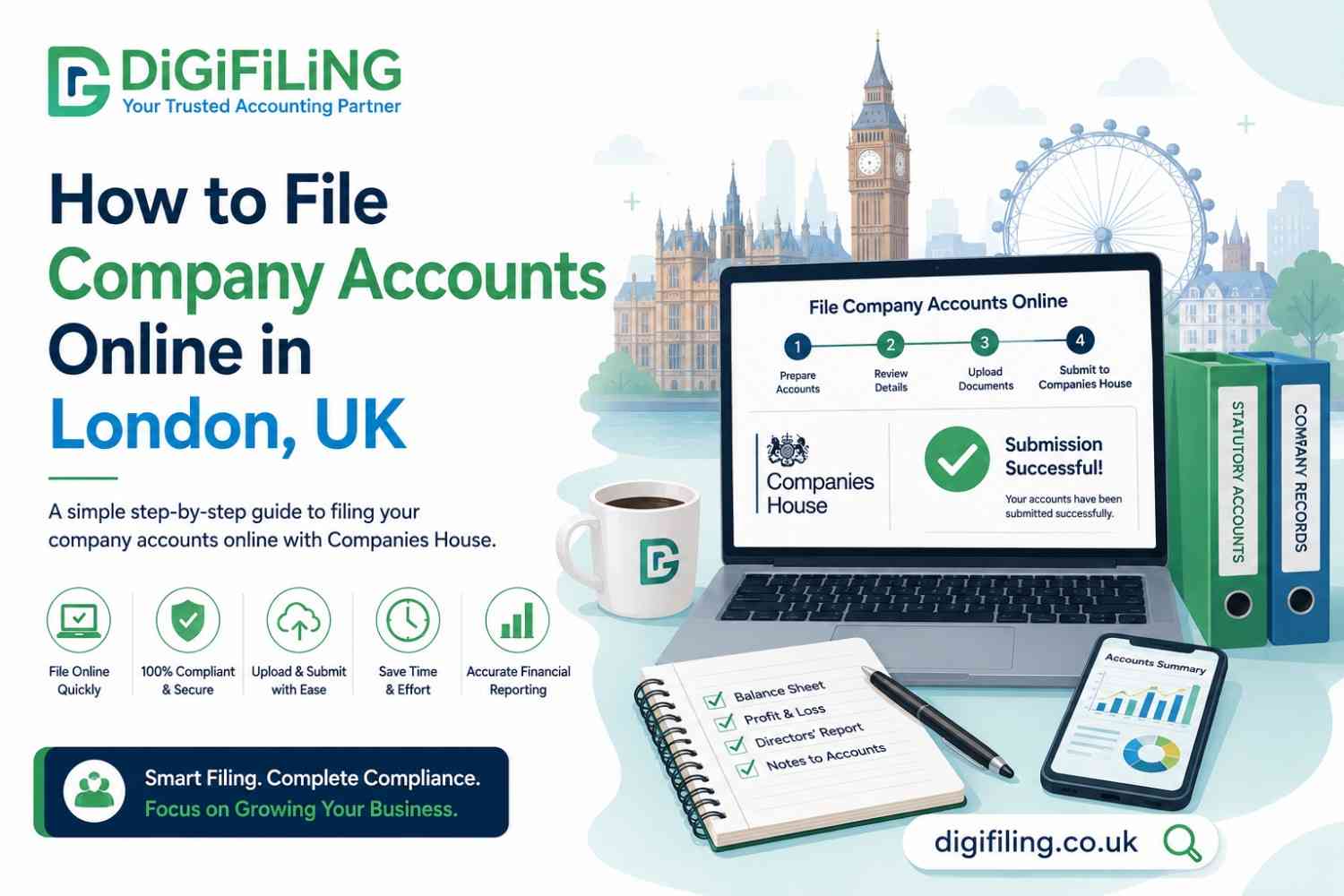
How to File Company Accounts Online in London, UK
The process of filing company accounts online has become easier with digital accounting systems and online filing platforms.
Here is the typical process businesses follow:
Step 1: Prepare Financial Records
Gather all relevant financial information, including:
• Bank statements
• Invoices
• Expense records
• Payroll information
• VAT records
• Previous accounts
Accurate bookkeeping is essential before preparing annual accounts.
Step 2: Prepare Company Accounts
Your accountant or accounting software prepares the required financial statements based on your business structure.
Small businesses and micro entities may qualify for simplified accounts.
Step 3: Calculate Corporation Tax
Corporation tax liabilities are calculated based on company profits.
A CT600 corporation tax return must also be submitted to HMRC.
Step 4: Submit Accounts to Companies House
Accounts are filed online through Companies House-approved systems.
Online filing is faster, safer, and more efficient compared to paper filing.
Step 5: Submit Corporation Tax Return to HMRC
Your CT600 tax return is submitted separately to HMRC along with supporting financial accounts.
Businesses looking to file company accounts online often choose professional accountants to ensure accuracy and compliance.
Documents Required for Filing Company Accounts
Preparing accurate company accounts requires proper documentation.
Common documents include:
• Sales invoices
• Purchase invoices
• Expense receipts
• Business bank statements
• Payroll records
• VAT returns
• Loan agreements
• Previous year accounts
Keeping organised records throughout the year makes the filing process easier and reduces the risk of mistakes.
Filing Deadlines for Companies House and HMRC
Understanding filing deadlines is extremely important because late submissions lead to automatic penalties.
Companies House Filing Deadline
Private limited companies must usually file accounts within:
• 9 months after the accounting reference date
New companies receive slightly different deadlines for their first accounts.
Corporation Tax Deadline
Corporation tax payment is usually due:
• 9 months and 1 day after the accounting period ends
The CT600 corporation tax return must generally be filed within:
• 12 months after the accounting period ends
Missing deadlines can result in penalties and interest charges.
How Small Companies and Micro Entities File Accounts
Small businesses and micro entities benefit from simplified filing requirements.
Small Companies
A small company generally qualifies if it meets at least two of the following:
• Turnover below threshold
• Limited number of employees
• Balance sheet total below threshold
Small companies may file abridged or simplified accounts.
Micro Entities
Micro entities have even simpler reporting requirements.
These businesses usually submit:
• Simplified balance sheets
• Reduced disclosures
This makes the filing process easier and more affordable for startups and small businesses.
Many businesses searching for company accounts in London support fall into these categories and require affordable filing services.
How to File Dormant Company Accounts
Dormant companies are businesses with no significant financial transactions during the accounting period.
Even dormant companies must usually:
• File annual accounts with Companies House
• Remain compliant with filing deadlines
Dormant accounts are simpler than trading company accounts, but still require accuracy.
Failure to file dormant accounts can lead to penalties or company strike-off procedures.
Common Mistakes Businesses Make When Filing Accounts
Many businesses make avoidable filing mistakes that create compliance and financial problems.
Missing Filing Deadlines
Late filing is one of the most common issues faced by small businesses.
Incorrect Financial Records
Poor bookkeeping leads to inaccurate accounts and tax calculations.
Filing Wrong Information
Incorrect figures or incomplete submissions can trigger HMRC enquiries.
Ignoring Corporation Tax Obligations
Some businesses focus only on Companies House filings and forget HMRC requirements.
Attempting DIY Accounting Without Expertise
Managing accounts without professional knowledge increases the risk of errors.
Businesses that file company accounts online should ensure all information is accurate and compliant before submission.
Penalties for Late Company Accounts Filing
Companies House automatically applies penalties for late filing.
Typical penalties increase based on how late the accounts are submitted.
Late filing can lead to:
• Financial penalties
• Damage to business reputation
• Director liability concerns
• Increased HMRC scrutiny
Repeated late filing can result in even larger penalties and potential legal consequences.
For small businesses, these costs can become significant.
Why Hire an Accountant to File Company Accounts in London, UK
Hiring a professional accountant offers several benefits for businesses.
Improved Accuracy
Professional accountants reduce the risk of filing errors.
Time Savings
Business owners can focus on growth instead of paperwork.
Tax Efficiency
Accountants identify allowable expenses and tax-saving opportunities.
Compliance Support
Professionals stay updated with Companies House and HMRC regulations.
Stress Reduction
Expert support provides peace of mind during the filing process.
Businesses searching for company accounts London services often prefer accountants who understand local business requirements and compliance obligations.
How Digifiling Helps Businesses Stay Compliant
Digifiling provides reliable and affordable support for businesses across London and the UK.
Our services include:
• Annual company accounts filing
• Corporation tax returns
• Bookkeeping support
• Payroll processing
• VAT return filing
• Dormant company accounts
• Online accounting support
We help businesses file company accounts online accurately, efficiently, and on time.
With transparent pricing and expert guidance, Digifiling supports startups, contractors, ecommerce businesses, and small companies throughout the UK.
Benefits of Filing Company Accounts Online
Online filing offers several advantages for businesses.
Faster Submission
Digital systems process accounts more quickly.
Reduced Errors
Online software performs automatic checks before submission.
Better Record Management
Digital records are easier to access and organise.
Improved Security
Online systems provide secure document storage and encrypted submissions.
Greater Convenience
Businesses can manage filings remotely without paperwork delays.
Final Thoughts
Preparing and filing company accounts is one of the most important responsibilities for UK businesses. Whether you run a startup, a small company, or a dormant business, staying compliant with Companies House and HMRC is essential.
Understanding filing requirements, deadlines, and common mistakes helps reduce risks and improve financial management.
Businesses looking to file company accounts online should consider professional support to ensure accurate submissions and avoid penalties.
Digifiling helps businesses across London simplify accounting, stay compliant, and manage company accounts with confidence.
FAQs About Filing Company Accounts in the UK
What are company accounts?
Company accounts are financial records showing a company’s income, expenses, assets, and liabilities during an accounting period.
Who needs to file company accounts in the UK?
Most limited companies registered in the UK must file annual accounts with Companies House and HMRC.
Can I file company accounts online?
Yes, businesses can file company accounts online using approved digital systems or professional accounting services.
What happens if company accounts are filed late?
Late filing results in automatic penalties from Companies House and may lead to additional HMRC consequences.
Do dormant companies need to file accounts?
Yes, dormant companies usually still need to submit dormant company accounts annually.
Why should I hire an accountant for company accounts?
An accountant helps ensure compliance, reduces errors, saves time, and improves tax efficiency.